
 What's Been Going On ?
I've been driving people crazy talking about a major economic/political collapse for over 30 years. As "Paula Revere", I warned my friends and family to a point of teeth-clenching (theirs AND mine) , but since nothing of obvious mega-systemic consequence occurred until recently, most folks let what I said, "go in one ear and out the other". Like many "experts" (who know far more about each individual piece of the puzzle than I do), my timing was off, so by the time the 2008-9 debacle struck, most people had written killjoys like me off as "doomsdayers". I learned to roll with the label while the system was crumbling... and now that the Empire totters visibly, those who discounted the warnings are now trumpeting, as if they had been on board all along.
In the 70's through the early 90's, I had a storage of dried food and other provisions, but gave up on that idea since no one in my closest family and friends group wanted to hide out in the woods waiting for the disaster.....and neither did I...... especially after so many years of watching the cycles reverse themselves without a visible crash in the system. Since I didn't want to change family or friends, my dream of a cooperative housing project has yet to come to fruition. The "Wake Up Bandwagon" is rolling along very rapidly, and I no longer seem so radical these days.
In the late 80's, I fell for the 'FUTURISTS" visionaries and engaged in seminars, adventures, and even trips to the jungle with them over the next 10 years. It seemed imperative (like it is today with the environmental hysteria over global warming.... aka climate change) that we had to change our ways and that ecology was tantamount. Little did I know that underneath all those seemingly heart centered, Earth saving trumpeting leaders of movements was what I now understand (this edit being in 2020) to be the New World Order emerging in costume after costume. So in the 80's I dug in with corporate leaders, New Age gurus, Jesuit trained transformational grand old men, dolphin aficionados like Timothy Wyllie and John Lilly (I was totally naïve and clueless), weekend seminars with Jean Houston, shamanic anthropology trips to the Yucatan with Joan Halifax and endless seminars on endless now Oprah topics.
I attended an educators conference of N.E. colleges and universities with a student of Buckminster Fuller' and the "futurist movement": August T. Jaccaci. What He presented a video on ecology and the future, which was based on Bucky's work (and others who had a real sense of how these events dovetailed with Nature and the variant influences of technology).... and instead of thanking Gus for his advanced awareness, we were both a source for a bit of derisive "doomsdayer-humor". Even Fuller's amazing credentials and positive view of the future (if we do the right things to make it so), didn't peak their interest. Their mind-maps were strongly embedded, and they couldn't open to different possibility. Yes, these were our educators.... I wonder what they think now and if they remember how closed they were to information about the future then. (Not that it really matters now, since what we must do is come together and deal with WHAT IT, instead of bemoaning the Past or belaboring the blindnesses of humanity.)
The "experts" on this website were off in their timing as well, but not in their understanding of what is going on "underneath" the American Dream tale. We are in deep trouble and now a majority knows it. 2012 loomed large as a giant symbol for "change" that couldn't be ignored, and more people began to openly talk about the twisted reality in which we live. Theories abound and although giant changes happen frequently in history, this level of economic disruption is not easy to correct, period. Here is a conference on futurists here in Maine in Sept of '09 by the Mindshift Institute. Check out the roster for this and years past. Yep, the very same AUGUST T. JACCACI is among the presenters. He has never quit envisioning............
For those of us who have already pared down and have little or nothing to "protect", this time of chaos wasn't such a shock. We are more flexible, more capable of "letting go", more open to shifting realities.....so now that the financial crash has finally occurred (a good 20 years after many predicted), this website should make sense to almost everyone. Whether they use it or not is a different story.
As all the teachers say: learning to LET GO quickly is essential in order to deal with the compression of "time" that we all feel. Hanging on to what worked before isn't going to do it. It's tough, really hard...but we all have to address our deepest imprints and subsequent deepest fears that are running the show ...or we're going to go down. No one is exempt.
Think of DownsSize to Thrive as a CRASH COURSE in Conscious Living, presented to you by the "Grandparents" who have learned from experience and are ready to help during these difficult times. Yes, we have degrees and have owned businesses, run corporations, educated, organized, built buildings and published books, but it isn't our formal education that gives us the ability to thrive when times change. Common sense and knowing how to DO things to take care of yourselves and your loved ones....bonding together and getting real.... these are the elements to downsizing that really matter.
DownSize to Thrive is here to help you learn to enjoy these rollercoaster changes that affect every single person on this planet. Since we're all greatly affected, why not make life easy for yourself and embrace the ride with delight. Learn to laugh at yourself, dammit. And if your friends can't and won't learn to embrace change with open arms, get new ones.
I'm doing exactly that, regardless of how harsh it seems.
Because of these life lessons, I'm not coming from a merely intellectual or theoretical perspective. I've been through the fire and know what it feels like to lose everything three time... under widely various conditions. Coming back wiser each time, I know what it means to ride the roller coaster of life well enough to empathize deeply with the human condition. And to know we must take our own selves on since no one can save us. No one is exempt from their own lessons.
Because of my own varied experiences, I have come to a far more centered and acceptant understanding of the emotional, psychological and physical benefits of casting off excess materialism (a heavy load) and sitting right smack dab in the middle of simplicity. The key for "thriving", (which is now touted absolutely everywhere even if we find out later that the "teachers" weren't actualizing their own "lessons") is to embrace the variables of change in a welcoming manner, however painful change feels at the time. However true the dictum, remembering to embrace the lessons as soon as possible, however, is difficult.. Sucks for most, however well it ultimately works.
It is your choice to face change either kicking or screaming.......... or bowing your head with gratefulness for the lessons that come your way. It's not usually fun... that's for sure, but If character building is a part of your psyche, you will "embrace" the WTF vision of yourself as "dumbass" (ego screaming NO as you go). As you dive down to recover the essential parts of yourself to facilitate the emergence of a " New-You", you'll come up sputtering with a soggy puzzle piece. Integration of Self is the goal, but the programmed parts won't leave willingly, if ever totally. We had better embrace the work over and over again because we're going to get difficult lessons anyway, even in the best of times. Now that there are no options, self-awareness is the only reliable game in town. Resistance to change, refusal to surrender your judgments, blaming, critiquing others.... all cause the wheel of karma to grind slowly. 2012 energy shifts are speedy and they are real. Get your resistance out of the driver's seat as soon as possible.
P.S It's the end of 2013, Can't wait to see what happens when I catch up with this. Needless to say, I'm not a lot of fun to be around right now. If you aren't awake by now I hate to think of what it will take.............
Life Experience...as brief as possibleAnonymity would the truly simple, most rewarding and most peaceful way to live our lives, but everyone wants to know other people's backgrounds. Once known, they immediately slot their new human into their own mental boxes, forming all kinds of erroneous beliefs and judgments. So to resist that, I could hold back information about my path, knowing it's just a story and basically meaningless, but that would have its own drawbacks in the process of connecting with others.
(Sigh. I'm not going to be anonymous regardless of how much a large part of me favors that lifestyle), so ...back to my story.
After getting degrees from The College of William and Mary and NYU in 1964, I fortunately soon realized how little I knew and how much there was to learn. From that time on, I plunged into a life-long autodidactic learning style , reaching widely into psychology, art, natural science, philosophy, spirituality, metaphysics, business, astrology, city living, country living, teaching, travel, and the most amazing job of childrearing. I was fortunate to be able to do all that and still attend more than my share of seminars and weekend workshops, traveling to sacred sites and to over 25 countries, studying the thoughts, actions and habits of those who create in every area of life. You name it.... if it affected how people handle their relational, mental, physical and spiritual aspects------I paid attention. I met a lot of interesting people, some famous and some equally as fascinating but totally unknown, and learned first hand that everyone is so basically the same and yet so incredibly different.... so non-exchangable, that I gave up. Regardless of how smart or successful, I realized that people are all scared, and if they don't work on themselves it only gets worse as they age in this wacky modern world of separateness. I bet even the Peace Pilgrim had her moments.
Business was my long suit, from managing 7 hand-made products stores in Manhattan to owning and operating a children's toy factory in central Maine with a staff of 30. We supplied over 6,000 accounts all over the country and internationally for 23 years, including the Metropolitan Museum, the Smithsonian, Neiman Marcus, Bloomingdales, all the major zoos etc. I've had a great time, a highly creative, busy and productive life but I can assure you it's been as hard for me to get through my own thick personality sink-holes as the next person. The key is to WANT to see yourself and alter those programmed fears.......... and it's a labor intensive, long term, mind-boggling, painful and most rewarding process. Doing the Work is what Life and this website is all about.
... and as I continue to lighten up (in large part because this website is finally functional), I'm going to start having more fun again, especially in times like these when it's a prized commodity. So to that end, I think I'll go to the beach.
SK
P.S. Mid 2013: I got past "lightening up". Now I'm just plain enraged, along with Craig Paul Roberts and all the other truth-speakers who are yelling about this ship going aground.....
April 2014: I got past anger. Now I just want to be productive at the highest order possible. Keeping on the path of self-awareness facilitates the peeling away of delusion at each new juncture. It happens by the nature of who we really are once you commit to the Process. Keep on going and keep on learning and keep on discarding judgments, delusions and above all: 'Don't Believe What You Think."
Instead of blogging, I'll spend my time adding great LINKS and other peoples' BLOGS to the website. I'll help you "downsize" your life and will answer emails, talk to you personally, talk to a group, but I won't blog as a method of communication. Personal contact is a dying art. I live on the computer like everyone else and blogging has to be taken out of this time equation....
Read this from the blog called "GET RICH SLOWLY":
“This bad economy is the greatest thing that ever happened to Hustlers and people in the trenches,” Gary tells the crowd. “It’s the best thing.” When you work hard, when you build Brand Equity — even if it’s only your personal brand — you can always make more money. But those afraid of hustle, or afraid of trying something new, get left behind.
“There’s a scary four letter word that a lot of people are just completely petrified of, and that’s called Work. That’s what you have to do,” Gary says. But he also says you need something else. “There’s nobody that has enough Patience. Everybody’s like, when’s it gonna happen? But you’ve been doing this for three months — are you kidding me?”
Gary describes how he spent 8-10 hours every day for 18 months pumping out a 20 minute wine video that nobody watched. He participated in the online wine forums. He commented at wine blogs. And gradually — very gradually — he achieved success. “That’s hard,” Gary says. “That’s Patience.”
I think that’s something that most people who begin blogging for dollars miss. They come here, for example, and see that Get Rich Slowly has 70,000 subscribers and gets over 25,000 visitors every day and they imagine that maybe it makes a lot of money. They figure they’ll start right up and do this, too — they’ll get rich quickly. But they don’t see the fifteen years I’ve been writing on the web, the ten years that I’ve had an online journal, the eight years I’ve had a blog, the three years that I’ve been building Get Rich Slowly. They want to go from zero to 70,000 in two months. It doesn’t work that way. It takes effort — and lots of it. No offense to Tim Ferriss, but the four-hour work week is a myth. It’s an ideal. Not even Ferriss works just four hours a week. He’s always hustling.
I don’t work four hours a week, either. In fact, most weeks I work 60. Or more. Not just this week, but every week.....
"AMEN. SO DO I and SO WILL YOU IF YOU'RE SERIOUS ABOUT THRIVING IN THIS ECONOMY." sk
DownSize to Thrive is dedicated to the unsung, wise and creative thinkers who have been suppressed or silenced by societal or family ridicule, economic ruin, incarceration and worse. Over the centuries there have been many unknown heroes who gave us life-giving information at great peril to their own safety. As we learn their wisdom, our own inner voices awaken from our slumber, sometimes incrementally, sometimes spontaneously! The devotion and sacrifice of these visionaries will not be in vain if we each take personal responsibility for our own lives, resisting the temptation to remain in fear and ignorance of the greatness of our potential... and choosing instead to do what it takes to become fully human.
LEGAL DISCLAIMERS
Views, opinions, endorsements & recommendations expressed herein are not necessarily those of DownSize to Thrive nor its editor, and neither DownSize to Thrive nor its editor can accept responsibility for listings and comments. DownSize to Thrive and its editor are not responsible for the content of external links or recommended books and other listed media sources. No material in DownSize to Thrive should be used to justify or condone illegal activity. They are for informational purposes only.
Medical Disclaimer: Information herein relating to health & medical issues and products has not been medically evaluated by government health agencies (such as the FDA) nor by DownSize to Thrive and/or its editor, and therefore should not be used to diagnose, treat or cure disease. If you are unwell, please check with a qualified health practitioner before undergoing any treatment program or changing any medication program.
Political & Religious Affiliations: Neither DownSize to Thrive nor its editor is affiliated with any political or religious organization. DownSize to Thrive receives no third party funding and no contribution involved an exchange of money.
What Dan Ward from Halexandria
Said About DownSize to Thrive...
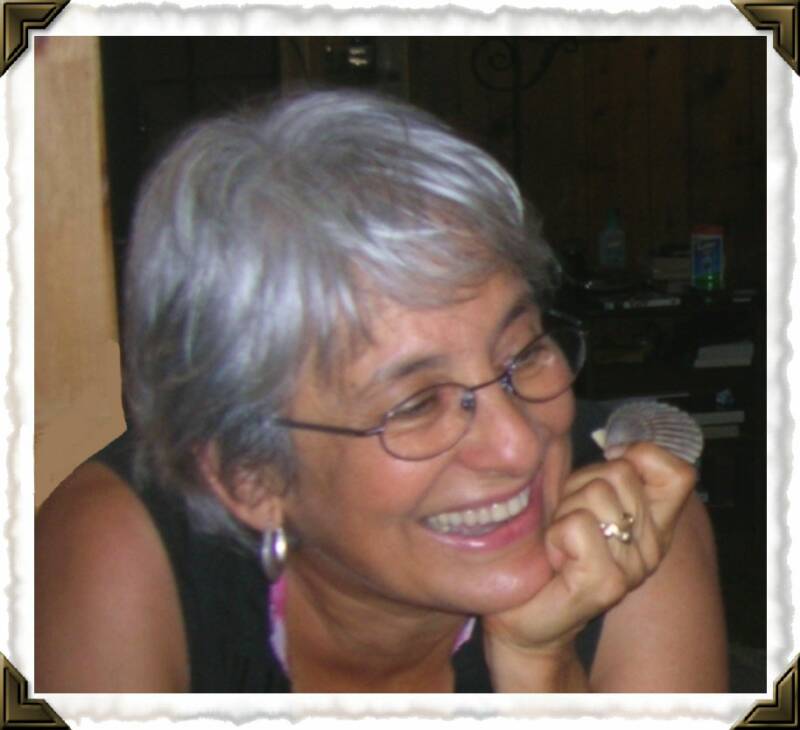
A Personal Note
from Shaleia
Well.. there are moments for everyone wherein they can find themselves momentarily
(or for far longer periods of time) in an atmosphere where the multiple, intense dramas
of modern life are not in total control of your life. The result is often feeling tremendous
relief, a sense of control over one's life, an opportunity to focus upon the joys of peace
and simplicity, and ultimately to find just how many options you choose among in order to live your life to the fullest. Admittedly, you may have to give up a portion of your life (best described as the "pure unadulterated crap" section)... but Hey! Your in-box can only hold just so much stuff! Right? Left?
In this regard, there is a fascinating website that addresses many of the issues involved in downsizing to thrive. Curiously, this website is entitled "DownSize to Thrive." Thevery name should give you some idea just how clever these folks are. (And if the truth be known, I checked out the web site before writing this article. I suspect I was even motivated by it. I also stole the title. However... The fact remains that over the last
twenty years I've gone through periodic housecleanings, downsizings... and yes, thrivings... to the point that I suspect I instinctively recognized a significant portion
of the web site's wisdom. And thus this blatant reccommendation to check out other
parts of Cyberspace.)
Which I suppose, you could do right now... and then come back here for more... stuff. (This is a serious risk, in that there's a LOT of stuff on DownSize to Thrive.)
Dan Ward
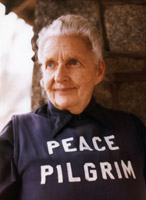
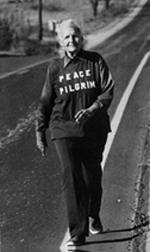
As life experiences go, the Peace Pilgrim is the one human whose life's path makes deep sense to me on a personal level. It isn't my journey, nor could it be unless all those I love suddenly disappeared and I was left floating in an abyss. (My endless downsizing has still left me with a tiny pile of "stuff", so I'm not fooling myself.)
The Peace Pilgrim's life IS the essence of human achievement. She actualized what we talk about, standing as a true, in-our-time reminder of what IS possible. She did her personal work and then, transformed, walked this country and Canada for 27 years with no possessions, eating and sleeping only when it was offered and speaking to all who crossed her path about "peace". Read her story. It will never leave your soul. READ HER "Steps Toward Inner Peace" HERE.
"The Peace Pilgrim has been called a prophet, a mystic, a saint, and a person who walked her talk. Her message was not new, but practicing it was. Here was someone who had relinquished all earthly possessions to live a focused life based upon spiritual truths and immutable principles." more...

NO BLOGGING

Jane Addams (1860 – May 21, 1935) was the first (except for my own mother) powerful female influence on my life. As a nine year old, I could not have had a better mentor, provided it had been taken in as a positive influence instead of through a child's twisted perception. In those days there was no adult /child dialogues to set these internally driven stories straight. We have, in that way, come quite a distance.
Do any of you remember those orange-backed biographies of famous people's childhoods that were popular in school libraries back in the late 40's-early 50's ? The pictures throughout the book were black silhouettes, which are permanently etched in my mind in the starkness that only a scissored silhouette can produce. Since most of the people who read this site in any depth are young (old folks don't want to learn how much they don't know), perhaps no one remembers this beloved children's series.Although I devoured them as an 8 year old, Jane Addams was the last biography I read for the next 45 years.
As an only child in a small Virginia town, I was kept very busy with all the lessons children today are taking (my mother was ahead of her time). Piano, violin, tap and ballet and drawing lessons all together by the age of 5. There was no time for childhood play, so those biographies were a way to connect with other children. Reading and climing trees were two excellent methods for getting away from the angst of the adult world. Little Brave Jane Addams was my heroine and I read the book 3 times. And then I stole it from the library.
In the orange children's book series, Jane Addams was called Little Lame Girl. She had a limp (it really was scoliosis but they didn't say that in the children's books). She was very brave and learned to overcome throughvery hard lessons. "Jane's childhood experiences taught her the importance of helping those worse off then herself. Her mother died when Jane was two; later, a bout with tuberculosis left the girl with a deformed spine. Growing up motherless and physically disabled made her sympathetic to other disadvantaged people." (See more from Scholastic)
Little Jane went on to be one of the bravest women in our American History. When you're living in times where children were kept in the dark about most issues we take for granted today, a super brave child is a difficult concept for a child to fathom emulating. So instead of being inspired to as something I could never do because I knew I was frightened by the miseries of life. I recall saying to myself: "I want to be just like Jane Addams but I can't... because I'm not brave enough." So for 45 years, due to a comparison between a child and another unknown child, I refused to use the tales of o ther's lives as guideposts for my own. Yep, the twist that children take in lays at the feet of their gravest repetitive problems.
A bit about Jane:
An American social worker and reformer, Jane was born in Cedarville, Illinois. The daughter of a wealthy father she and her siblings were educated in the U.S. and Europe. She was a very determined young lady and let nothing stop her quest for making a difference in the lives of the working class.
In 1889 she co-founded (with Ellen Gates Starr) Hull House in Chicago, which was one of the first settlement houses in the United States. Like other settlement houses, Hull House was a type of welfare house for the neighborhood poor and a center for social reform.
In 1911 Addams also helped found the National Foundation of Settlements and Neighborhood Centers, and she was its first president. She was also a leader in women's suffrage and pacifist movements and received the 1931 Nobel Peace Prize (shared with American educator Nicholas Murray Butler).
The Hull House helped over 2,000 people a week. It had facilities including: kindergarten classes, clubs for older children, a public kitchen, an art gallery, a coffeehouse, a gymnasium,a night school for adults, a girls club, a swimming pool, a book bindery, a music school, a drama group, a library, and labor related divisions.
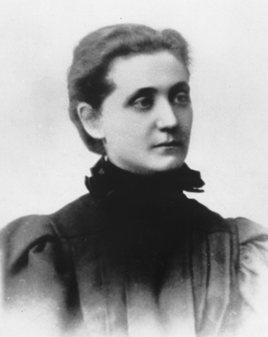

I'm curious to see if anyone can identify this charismatic, intelligent guy before I have the time to tell the backstory. Also curious to see if anyone sees this buried on the back page . Email me if you see this picture and can identify the Mystery Man. No, you don't win anything. [email protected]


Why Afghan Women Risk Their Lives To Write Poetry
NYT Magazine April 27, 2012 Click here
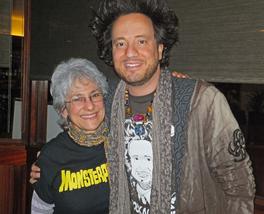
KNOW THIS INTERESTING FELLOW?
Experiences are our true teachers and we're getting endless opportunities for growth these days. I have had my share of "learning to thrive through adversity"....having survived and advanced my sense of courage and calm through three economic crashes during my 40 years of having been a business owner.
DownSize to Thrive is a practical advice-packed website that shows the
reader how to find balance in life and with the environment so that we can survive the 21st Century. From inner growth to managing your money, from learning to embrace simplicity to being satisfied with less, this site is a
treasure trove of wisdom that is becoming increasingly non-optional as we teeter towards the possibility of societal and ecological collapse. Check out
the Survival Bible section which offers a one-page solution to the global crisis.
DownSize To Thrive
ABOUT
It's not a mystery that a website like DST takes many years to create. It then takes untold hours of upkeep, which I have not been able to accomplish the way it should be done..... for obvious reasons of 3-D TIME. Thus any donation given with desire to help is more than greatly appreciated. SK
What I Really Think February 17, 2016
This was on the HOME page. I moved it here because only hard core seekers would get this far. After many years of hard hitting, I have decided to play my last years a little softer, to try to find a kinder way to ease some people into to this information. I want to hit hard, move fast and lay it out clearly, but in my heart, my target audience are those who are on the fence, frightened or fearful of accepting the value of truth. So if someone finds this who is still scared shitless and madly resisting, here we go.
Humans have been systematically programmed into multi-layered acceptance of the pernicious ideology of fear and enslavement to the hive mentality, to childish beliefs and ultimately to live in a 'divide and conquer' world view. The result, which we have been trained to consider our only "reality", is endless war mongering through the enslavement of our life-energies, minds and hearts by overarching materialism, patriarchy and psychopathic leadership.
What's the real story? Can we come together despite our differences for our mutual survival? Can we change our own programming to do so? Those are the real questions we face.
The many forces that effect multiple levels of existences morph constantly. These forces range widely and go deeply and exist on multiple levels of reality simultaneously. They effect us beyond our wildest imaginations, but are being brought to our attention through many sources as fantasy. As we learn, we fin that fantasy is allowed but the same truths presented as the reality that they are, are denied. We must get past this to reclaim our birthright as brilliant beings with a b right and shining future. If not, we are just another experiment that has had its turn at bat. Either way, it's a great ride especially if you take the expert slopes.
It seems plausible for many wise teachers, that we still have the power to assist the transformation of our world by individually ripping off our blinders and shackles and awakening from the 'dream'. It's not news that all is energy and that we are energy-beings with hard-wired capabilities of true greatness. It's our primary energy modality, our soul perhaps, that makes us a source of power for other entities to use if we remain drugged by the Control System. Advanced technologies do exist that have the capabilities necessary to correct our present path toward self-annihilation but helping humanity isn't in the Controllers' agenda. We must connect with our own intent to heal, align with our Free Will and Light-energy birthright, to liberate our selves and reconnect with our gifts from Mother Gaia/Sophia. No one can or will save us but our own choice to uncover our true 'greatness' and act on this understanding. "The steps will appear beneath our climbing feet."
Many dedicated teachers on this site know aspects of the story of 'what, how, who, and why' this misleading and inaccurate Story of Humanity has been in place for so very long. We must extricate ourselves from the brainwashing even if we disagree with each other over the Story. No one is historically pure in their understanding, but many know the tale is twisted toward the winners who wrote the books and have the armies. So why not join the growing numbers who are eager to learn what has been taken from us through thousands of years of enslavement. KNOWLEDGE and the power of Spiritual Alignment light our path. There are no options remaining but to shake ourselves awake and reclaim our birthright while we still have time. Ditch the Kardashians. Turn off your tv. Welcome to the Land of the Living.
The ideas, concepts and links found on each page in *DownSize to Thrive" are powerful tools for uncovering the various beings whose waking lives are focused only on control and capital by depleting the world's natural resources and sentient life-forms. Our natural gifts of wisdom and intuitive processes have been replaced with false beliefs & delusions to keep us enslaved for the benefit of the Few. To survive the burgeoning mayhem we must replace these distortions with clear sight. We cannot successfully traverse our massive social, economic, emotional and spiritual difficulties with our modern day sound bites and limited understandings. Accepting how little we truly know while steadfastly searching for deeper and more profound inner and outer' Truths', will free us to cast off our Denials and actually thrive in this rapidly changing world!
On this trip through DownSize to Thrive you will find dedicated scholars (not to be equated with advanced degrees... for many scholars are autodidactics whose knowledge far surpasses the titled-souls emerging from our institutions...) whose passion for knowledge has led them to discoveries necessary for our survival as a species. The topics are powerful tools for uncovering the methods used to keep us ignorant. Creating and perpetuating the centuries old false beliefs & delusions has been an art form of immense proportion. NOW we have the information to see through the sham. it is our personal duty as evolutionary beings and responsible citizens, to utilize this information... for we cannot successfully traverse the minefields with our limited understandings from centuries of obfuscation and oppression created by the pathological dominant paradigm.
My job is not to tell you what's "true", but to encourage and support you, to stimulate and excite you and to help you do your own research more easily. Time itself is altering; you can feel it, so denial is fruitless and a waste of your precious life force. Uncovering these truth-speakers gives our life deeper meaning and potency, keeping us vitalized at a core level. Being awake is being alive.
Here's to unraveling the false-dream with a full heart,
Shaleia
